

The first time AI did something that should have surprised you, it didn’t. What it did was stranger than surprise. It reminded you of something you could not quite name.
You may have called it awe. You may have had no word for it at all. You may have closed the laptop and gone for a walk and not been able to say why your chest felt different on the way home.
Most people misname this feeling because the language they were handed for AI is the wrong language. It comes from the makers of the tool, not from the experience of standing inside it. The makers say transformation, productivity, augmentation, frontier. The body knows it as something else.
The body knows it as recognition.
Recognition is not awe. Awe is for the unfamiliar. Recognition is for the thing you forgot you knew.
I.
The story you have been told about AI goes something like this. There is a door. On the other side of the door is a room you have never been in. The room is vast, unfamiliar, full of velocities you cannot match. You must learn to live in it. Or you will be left behind.
This is the story almost every executive is sitting inside right now. In 2025, nearly four times as many directors of major firms stepped down from their boards as the year before. Korn Ferry’s Anthony Goodman named one of the forces driving them: AI is so transformative that a lot of directors are asking themselves if they are still relevant to the new age we are entering.
The story is wrong.
Not because the room does not exist. It exists. The story is wrong because it points the wrong direction.
The room is not in front of you. The room is behind you.
II.
Everyone is arguing about the door.
The toolers, the technologists, the futurists, the doomers — different camps, same fixation. How fast it should open. What’s on the other side. Whether to walk through or seal it shut.
The door is not the point.
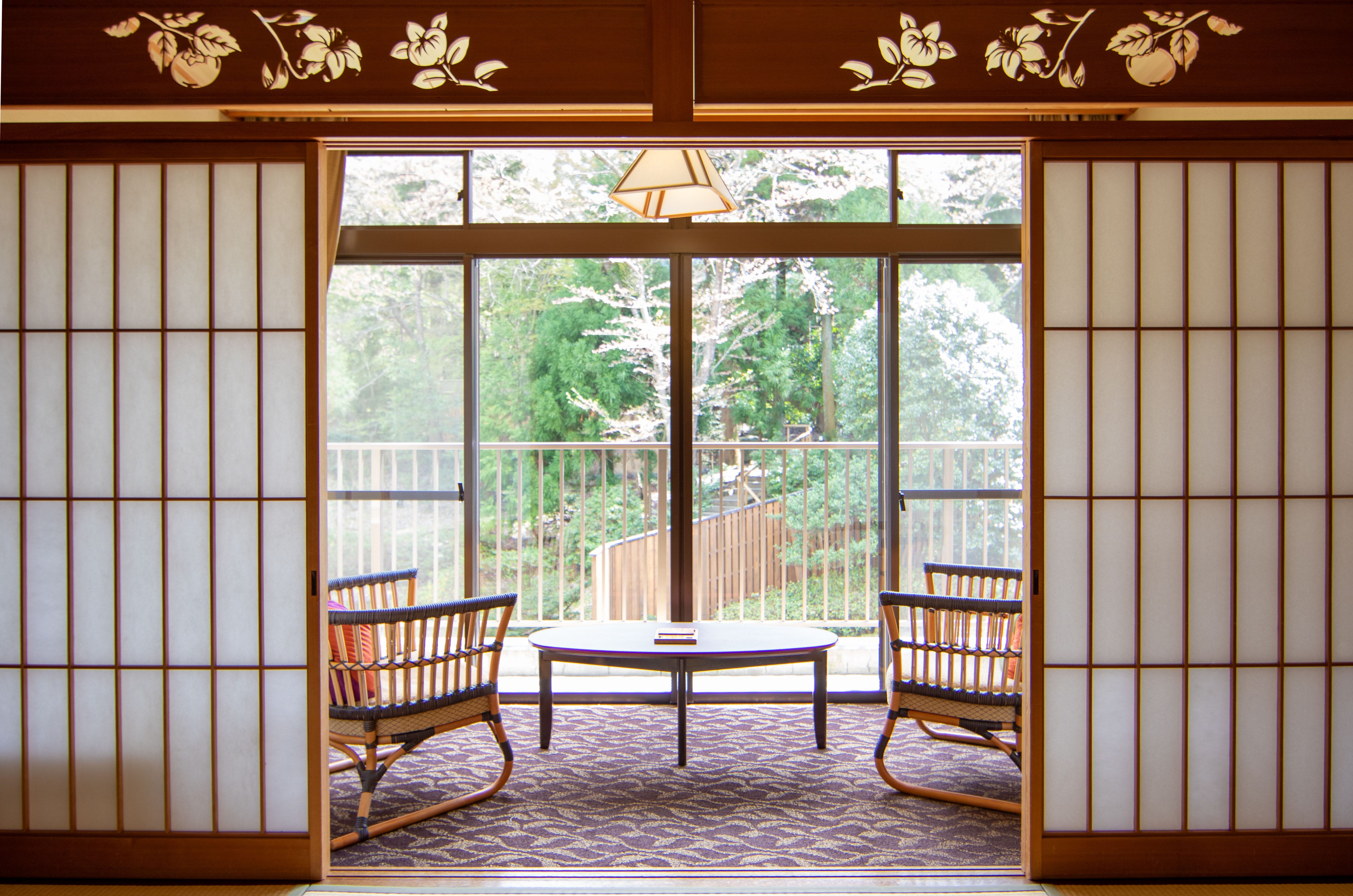
In a traditional Japanese house, a shoji is a sliding paper door. Slide it sideways and a new space opens. The shoji is not the destination. It is the membrane between where you have been standing and where you are about to stand. Its only function is to be moved.
AI is the shoji.
The room AI opens onto is not a future you must enter. It is a past you were not allowed to keep.
It is the version of you that read voraciously as a child until someone told you to focus on the curriculum. It is the version of you that could hold seven disconnected ideas in your head at once and feel them quietly start to braid. It is the version of you who knew, in a meeting, that something was wrong long before anyone in the room could name what it was — and who learned, eventually, to stop trusting that knowing because it could not be defended on a spreadsheet.
It is the version of you who, as a child, knew instantly what you liked and disliked — before someone came along and gave you a million reasons to dismiss yourself. The child knew how to taste before you were taught to think.
In Latin, sapere meant both to taste and to be wise — the same verb did both jobs. To the Romans, wisdom was understood as a kind of discerning palate, a feel for what was true. The mouth and the mind were one instrument. Somewhere along the way the two senses came apart. We named ourselves Homo sapiens — wise humans — and built a civilization that rewards almost everything about us except the part that tastes.
The room behind the door is the room where the tongue and the mind are one instrument again.
III.
I know this not as theory. I know it as a sequence of moments in a life.
I know it because a stranger once recognized something in me at twenty-six that I could not yet recognize in myself, and bent my trajectory with three words in a letter.
I know it because a child I love was measured for years against a ruler that was never built for the shape of his mind, and the failure was never his to carry — only the wrong ruler.
I know it because the leaders I sit with, the ones who arrive convinced they need to adopt a tool, leave the engagement having adopted nothing. What they leave with is the part of themselves they had set aside to be effective inside systems that did not match them.
They did not enter a new room.
They came home to one.
You started working with AI a few months ago. What you actually started was remembering.
The first time something surprised you, the word you reached for might have been awe. What you actually felt was recognition that the part of you capable of being surprised had still been there all along — quiet, waiting, slightly hungry.
It does not matter how technical you are. It does not matter how old you are. It does not matter what you came up doing. What matters is whether you can stand in your own room and recognize what was already yours.
This is the practice.
Not a one-time recognition. A daily one. The door opens many times. The room is large. There are corners of it you have not been in for forty years. You may walk into some of them and find yourself overcome with emotion — sudden tears you cannot hold back. You may walk into others and laugh. You may bring back something from a corner of the room you forgot existed, and put it back into the work you do tomorrow morning, and your colleagues will not be able to say what changed — only that something did. And one day, a passion you set aside long enough to stop expecting it back may come back into focus. With new love. Because you let it.
The people who will define the next decade are not the people who adopt AI fastest. They are the people who can stand in their own room and not flinch.
AI is the door, but the room is me.
I’m starting to remember.
— JC