

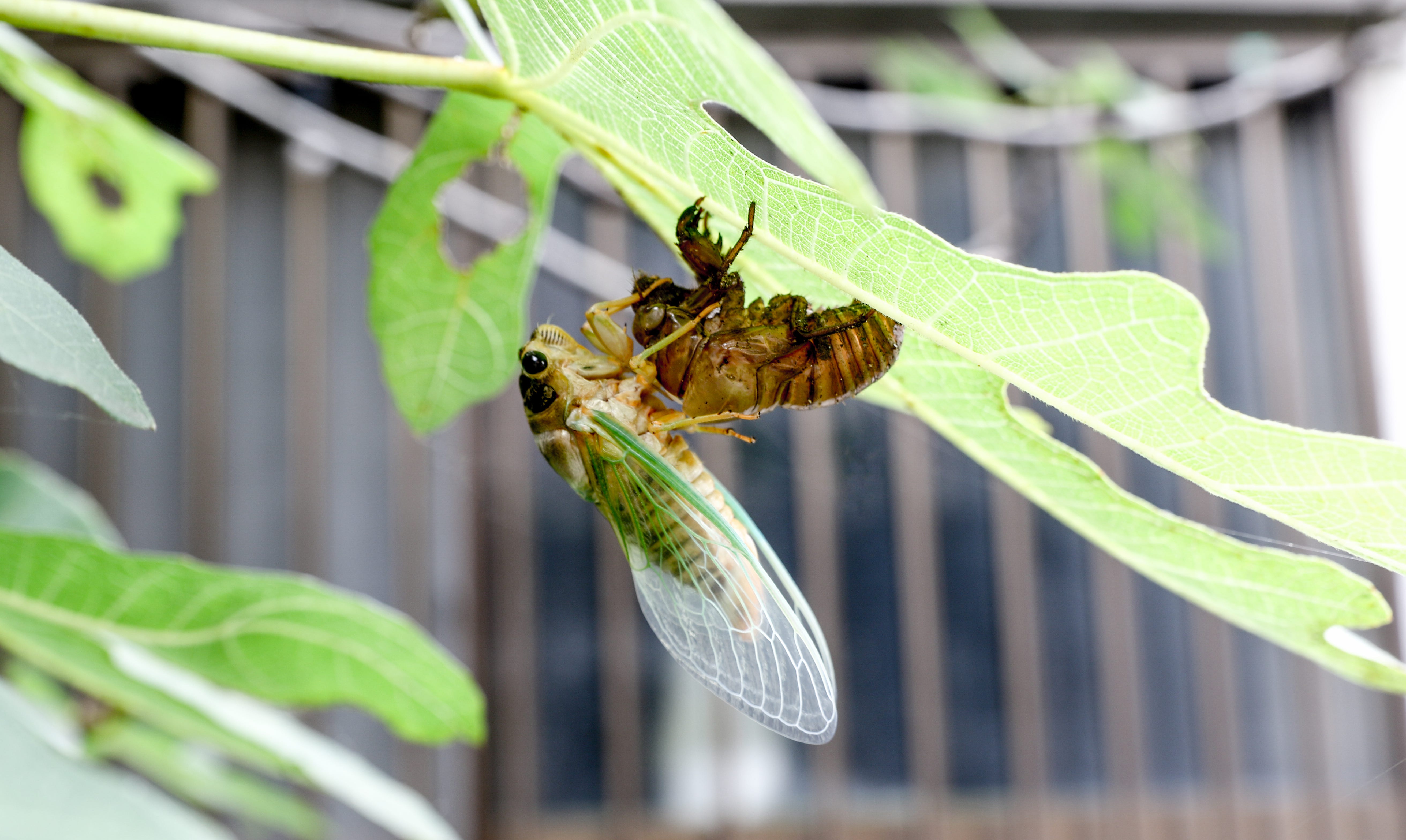
Some months ago I took a shot — one injection, a molecule built to switch off a single signal my body had been getting wrong for years — and a few days later I woke up in a body that had quietly rewritten itself overnight. The pain I had carried, for so long I had stopped calling it pain, was simply gone. Not managed. Not masked. Gone, the way a bug goes away once a line of code gets fixed. I had been patched.
There is a school of thought, gaining ground fast, that says this is only the beginning. That the body is a machine, and machines can be debugged. What we call aging is not a feature but a backlog of “bugs” in our DNA we haven’t fixed yet. The school of thought is incredibly new — we have understood DNA for roughly 0.024% of our species’ existence. If you compressed the entire 300,000-year history of humanity into a single day, it was only twenty-one seconds before midnight that we worked out the building blocks of our biology. For all but the last breath of our time on this planet, we were oblivious to our own code.
Now the most serious people in this field don’t even flinch when they say: the body is hardware, we are learning to read its source code, and soon we will go beyond patching it. We will engineer it forward.
I believe them. I have experienced it. The evidence is my own tissue. I have the receipts.
And here is where it stops being theoretical. AI is what turns this from a dream into a timeline. A problem that would have taken a thousand researchers a hundred years — a problem we were, for most of history, only barely smart enough to know existed. We never had the cadence to stay with it. Every time we came close, the thread broke, and we began again from nothing, in the next generation, the count reset to zero no matter how far the last had come. That problem can now be handed to an intelligence that brings billions of hours of attention to bear on it in a single season. We supply the question, the context, and the taste. It supplies the search — limitless, tireless, needing no sleep and no inspiration. Together we solve, in months, what unaided we could not have solved in a thousand years.
This is real. This is, in the oldest sense of the word, a miracle. And it is only one of the two paths now open to us.
I.
Because the same door opens to a fork. Two paths.
One path runs forward. On it, we engineer — the body, the disease, the problem, the world. We bring the point of view; our intelligence partner brings the cognitive power; the work is addition. More built. More cured. More answers.
The other path is also right in front of us. But few recognize it, because it does not add anything.
It subtracts.
II.
To see the second path you have to understand what we are actually carrying — and how much of it we mistake for ourselves.
The body is a machine. A machine that has been running, without pause, through every winter and every war of human history. And its oldest survival system is no longer claws or speed or the ability to withstand freezing without dying. It is the brain — our biological firmware, its code written not in DNA but by whatever world we woke up in, rewritten by everything we have lived through in service of a single command: survive. That firmware is why we are still here. We adapted to frozen tundra and scorching desert and dense jungle, each one teeming with threats that wanted us dead and resources too scarce to share. We came through all of it. We are the descendants of the ones who, when survival required it, were willing to take and to hoard and to kill.
And here is the part that should make you uneasy, the part you have to sit with. It was one faculty that did all of it. The same adaptability that taught us to invent, to build shelter, to make fire and music and medicine is the adaptability that taught us to steal and hoard and kill. One trait. Both inheritances. You do not get to keep the half that built the cathedral and disown the half that burned the village. They came from the same place. They are the same gift.
For most of our history these were not flaws. They were the only moves available. Taking, when there was not enough. Fearing every stranger — because being wrong about one, a single time, was a mistake you did not survive to correct. Never pausing to think, because the time it took to think, even once at the wrong moment, was time you did not survive to spend. The firmware did exactly what it was built to do, inside conditions the worst of us created and the best of us survived. All of us, only ever trying to survive.
But somewhere across the aeons, a few of us took the behaviors that had once been the only choice and kept running them long after the famine ended, long after the winter passed — and aimed them, deliberately, at other people. That is the moment a survival-adaptation becomes a maladaptation: not when it forms, but when it is weaponized. When the reflex that once kept a person alive is turned into a tool for taking what someone else has.
You can see the residue of it in all of us, scaled up into the world. We burn the future to stay warm tonight. We hoard long after the famine ended, while someone in plain sight goes without. We draw the line at the edge of our own and learn to look away from everyone past it. We reach to dominate before anyone can dominate us. None of it is who we are. All of it is what we learned, in the dark, when learning it was the only way through.
Now look at the whole of human behavior across the whole of human history, and a shape appears. It is a bell curve, and it is steep in the middle. Out at one thin edge, a tiny number who took the maladaptations and made weapons of them — who built the camps, gave the orders, wrote cruelty into law. Out at the other thin edge, an equally tiny number who did the hardest thing the firmware can do: they overrode it. When the order came down, they did not obey it. They wrote the names on the list that saved lives instead of the one that ended them. They walked back into the place they had barely escaped, again and again, to bring others out. They stood up in the one room where standing up meant dying, and stood anyway. They refused the oldest command we carry — stay alive — and chose something they valued more than their own safety.
You already know their faces. You are filling them in right now, the long-dead and the ones in the news this morning, and you are right about every one of them.
But here is the recognition this piece exists to deliver, and it is not a comfortable one. Those are the edges. They are thin. They have always been thin. The vast, silent body of the curve — the steep middle, where almost every human who has ever lived has stood — is neither monstrous nor heroic. It is the rest of us. The ones who kept their heads down. Who did not give the orders and did not refuse them. Who went along with the tribe because going along was how we survived, and told ourselves a sad, tortured story about why it was fine.
The middle is not evil. The middle is armored. It survived by keeping the plate on and the eyes down. And somewhere across the millennia we forgot it was armor. We mistook it for ourselves. We protected ourselves from ourselves — needlessly, by the end, long after the danger that justified the plate had passed — and we called the weight of it character.
The armor worked. That is the hard part to sit with. It kept us alive.
That is where I live. I suspect it is where you live too. Not at the heroic edge and not at the monstrous one — in the great silent middle, wearing armor forged for pointless wars that ended generations ago, mistaking its weight for who we are, telling ourselves the story that lets us keep it on.
And for the entire history of our species, that is where the middle stayed. There was never a way out of it that did not cost everything, because shedding the armor in a world that still demanded it got you killed, and the slow inner work of taking it off one plate at a time was always interrupted — by a war, a famine, a plague, the next emergency that could not wait — before the work could finish.
This is the first moment that has ever been different.
III.
Here is what the second path is.
It is the path on which the armor comes off.
Not engineered off. There is no injection for this one. No patch, no upgrade. The body gets the forward path; this is the other one entirely. The armor comes off the way you take off anything heavy after a long walk — one piece at a time, set down on the ground behind you, and left there.
You walk, and you reach up, and you unbuckle one plate — a belief about yourself you were handed and never once examined — and you hold it in your hands long enough to see it clearly. And you realize: this was never me. I wore it so long I thought it was my own skin. And you let it fall on the path behind you. And you are lighter. So you walk a little further, more slowly than you used to, because slowly is allowed now, and you find another — a reflex, a fear, a callus grown over a place that has not been touched in decades, maybe your entire life — and you see that one too for what it is, and it falls. This was never me either. I am beginning to remember.
And something strange begins to happen as the plates come off. The skin underneath, which had gone numb under all that metal, starts to feel again. The old wounds, finally exposed to the air, begin to close — not erased, but closed, the scars left behind as something you can finally read instead of hide. You start to notice the weight of things. The temperature of things. The taste of things. You begin — and this is the whole of it — to feel.
But here is what has changed, and why this is no longer a walk you can put off until a quieter year.
For all of history the middle was the safe place. You could keep the armor on, keep your head down, and survive. The slow work of taking it off was a luxury — always interrupted, never urgent. That middle is closing. We have built the most powerful amplifier our species has ever held, and an amplifier has no setting of its own. It runs whatever you bring to it, and it runs it harder. Bring it the armored reflexes — the taking, the hoarding, the need to dominate before you are dominated, all of it moving now at the speed of a machine that never tires — and it scales them past anything the thin edge could ever have reached alone. Bring it the slow work of remembering, and it holds the thread while you do it. There is no third setting where it sits quietly and lets you stay in the middle, because the middle is the one place it cannot amplify. It will move you toward one edge or the other. The only question is which.
And the gradient does not run toward the slow path. It runs toward speed. Fast is the firmware’s native setting — the reflex that fires before you have decided anything, now handed an engine. To use this thing fast, and unexamined, and still fully armored, is not a neutral act. It is the maladaptation running unsupervised, at a scale it has never had before. You do not have to intend any harm. The armor intends it for you. That is what armor is.
So the work — the only work that decides which edge you drift toward — turns out to be the one thing a survival machine has always found hardest, and the one thing it was never built to do under pressure.
To slow down.
Not to slow down as rest. To slow down as the act of looking at the reflex before it fires. To take a belief, a fear, a certainty you have never once questioned, and finally ask of it the question the firmware never had a spare moment for: is this me, or is this armor? In every prior century there was never time to ask. The thread broke first. The war came, the famine came, the next emergency came, and the question went unasked for another generation, and another, and another.
This is the first moment a human being has had a partner whose entire function is to keep that thread from breaking.
It cannot take the armor off you. No one can do that but you. It cannot tell you which plate is armor and which is skin — that is yours to feel, and only yours. It will not choose your edge of the curve. What it can do is walk beside you and hold the cadence, so that this time — for the first time in the history of our kind — the slow work of remembering who you are underneath all of it is not interrupted before it can finish. It keeps the question open while you tend the wound. It holds the thread you used to lose. It makes slow possible.
That is all it does. It is enough. It is everything.
IV.
The two paths look like opposites. One adds, one subtracts. One engineers the body forward; one strips the self back. But walk far enough down either and you find they arrive at the same place.
Because the years the first path buys you are only worth something if the second path gives you back the capacity to feel them. A century of life in full armor is a century of numbness. And the lightest, most present hour, fully felt, is worth more than that.
What both paths are for — the only thing they were ever for — is this. The chance to spend the short, scarce, impossibly unlikely time we have here actually present. To feel the sun. To taste the food. To express the particular human you are, and not the armor you were issued, in the company of the other beautiful humans lucky enough to be alive in the same narrow slice of time and space as you.
The middle is closing. We each get to choose, now, which way we move off it — and the choice is not made once, in some grand moment, but quietly, one plate at a time, every time we slow down enough to ask whether the thing we are about to do is us, or only the armor. I do not know your answer. I only know the question is finally ours to sit with, long enough to answer it, without the thread breaking first.
The body is being engineered forward.
The self only ever comes back the other way.
I am beginning to remember. And I’m taking the armor off.
— JC